Preserving the legacy of Islamic knowledge for future generations

Islamic intellectual heritage, with the sources shown.

Research articles and Urdu documentaries on the scholars, books and ideas that shaped Islamic civilization, in Urdu and English, with the source for what we say set out beside it.

From the library

Long-form profiles of the scholars and books that shaped Islamic civilization, written to be read and to be checked.

Research article

Fatima al-Fihri: what the sources actually say

Popular accounts call her the founder of the world’s oldest university. The whole story rests on one fourteenth-century chronicle, written some 450 years after the events it describes.

We trace each claim to its source and separate what is established from what is tradition and what is legend.

Main source: Ibn Abī Zarʿ, Rawḍ al-Qirṭās (early 14th century). Every claim in the article is graded as established, traditional or disputed.
  • Al-Ghazālī Coming soonc. 1058–1111Knowledge, doubt and the search for certainty
  • Ibn Khaldūn Coming soon1332–1406The historian who looked for patterns in civilizations
  • The Muqaddimah Coming soon1377A study of civilization, history and human society
  • Ibn Rushd Coming soon1126–1198Reason, revelation and the pursuit of understanding
  • Rūmī Coming soon1207–1273Poetry, meaning and the education of the heart
See all articles

Documentaries and reels

Our films are made in Urdu, for viewers who want history told with care and with its sources.

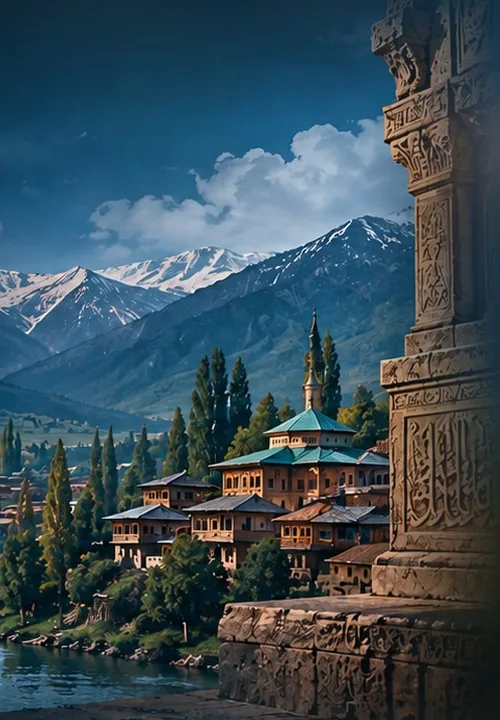
A Kashmiri town with a green-roofed shrine beside a river, mountains behind

Documentary series in two parts

Caravans of Faith: The Story of Islam in Jammu and Kashmir

How Islam reached Jammu and Kashmir, who carried it, and what part the Sufi orders played. The second part gives the hill regions the attention they rarely receive.

  • Part 1: The Kashmir ValleyWatch on YouTube
  • Part 2: The hill regionsIn production
Visit our YouTube channel

Al-Bīrūnī

The scholar who measured the Earth.

Watch the reel

Ibn Baṭṭūṭa

Nearly thirty years on the road.

Watch the reel

ʿAbbās ibn Firnās

The man who tried to fly. Our next reel.

How our work is made

Artificial intelligence speeds up our drafting. It never has the last word. Every piece is built around four stages, and any page that has not yet completed scholarly review is clearly marked as a draft.

  1. Sources

    We start from primary texts in Arabic, Persian and Urdu, and the best modern scholarship on them.

  2. Draft

    AI tools help us gather references and prepare a first draft quickly.

  3. Verification

    A scholar checks every verse, ḥadīth, date and quotation against its source, and rewrites what needs it.

  4. Publication

    Only then do we publish, in Urdu and English, with the sources named.

AI-assisted. Scholar-verified. Heritage-rooted.

Translation: Arabic, Urdu and English

We translate between Arabic, Urdu and English in every direction: classical and modern Arabic texts into Urdu or English, Urdu and English texts into Arabic, and between Urdu and English. Drafts may be prepared with AI tools; every line is then compared with the original by a scholar before it is delivered.

  • A faithful translation, with Urdu set in Nastaʿlīq
  • Terminology kept consistent across the whole text
  • Qur’anic verses and ḥadīth checked against their sources
  • A note wherever the meaning of a passage is uncertain
  • Editorial review of existing translations, on request
Request a translation

We reply to every request within three working days.

Specimen: the opening ḥadīth of Ṣaḥīḥ al-Bukhārī, with our Urdu and English renderings

إِنَّمَا الْأَعْمَالُ بِالنِّيَّاتِ، وَإِنَّمَا لِكُلِّ امْرِئٍ مَا نَوَى

اعمال کا دار و مدار نیتوں پر ہے، اور ہر شخص کے لیے وہی ہے جس کی اس نے نیت کی۔

“Actions are only by intentions, and each person shall have only what they intended.”

Ṣaḥīḥ al-Bukhārī, Kitāb Badʾ al-Waḥy, no. 1

Our standard

Trust is the only thing an institution like ours has to offer. These are the rules we hold ourselves to. A page that has not yet met them carries a draft label until it does.

  • Qur’anEvery verse checked against the Muṣḥaf.
  • ḤadīthSource and grading checked for every report we cite.
  • HistoryEvery historical claim carries its source.
  • TranslationReviewed line by line against the original.
  • AIAI-assisted text stays labelled as a draft until a scholar has reviewed it.
  • CorrectionsWhen we get something wrong, we correct it openly and say so.

In preparation

Two parts of the house we are building now. We will open them when they meet the same standard as everything else.

Publications

Our first annotated booklets, in Urdu, with full references.

The Library

Our scholar and book profiles gathered into collections by period and subject.

Letters from Turāth House

New articles, translations and documentaries, sent when there is something worth reading. Never more than twice a month.

Subscriptions open when the site launches. Until then, new work appears first on our channels.